Digital Hands
Around two years ago I started writing about AI, and comparing it to a digital brain.
The idea was simple: The easiest way to understand AI systems like ChatGPT is to just think of them as digital versions of a human brain.
You can talk to ChatGPT via its interface. It can store and retrieve information from its memory. It has intelligence in the form of an AI model. And it has a home where it lives, called hosting.
You want to own your digital brain for the same reasons you want to own your physical brain.
I stopped writing around 10 months ago. Not because I gave up, but because I ran out of things to say.
The digital brain was still a brain. It could think. It could remember. It could talk to you.
AI model intelligence has increased quickly, but the fundamentals I laid out in my previous posts stayed the same.
At least until recently.
If you are close to anyone that uses AI for coding, you likely know that something shifted around December of last year.
And while that something is obvious in hindsight, my earlier writings missed it completely.
So what changed?
AI evolved beyond the digital brain.
It now has digital hands.
And this changes everything.
Here's why:
The Human Analogy Continues
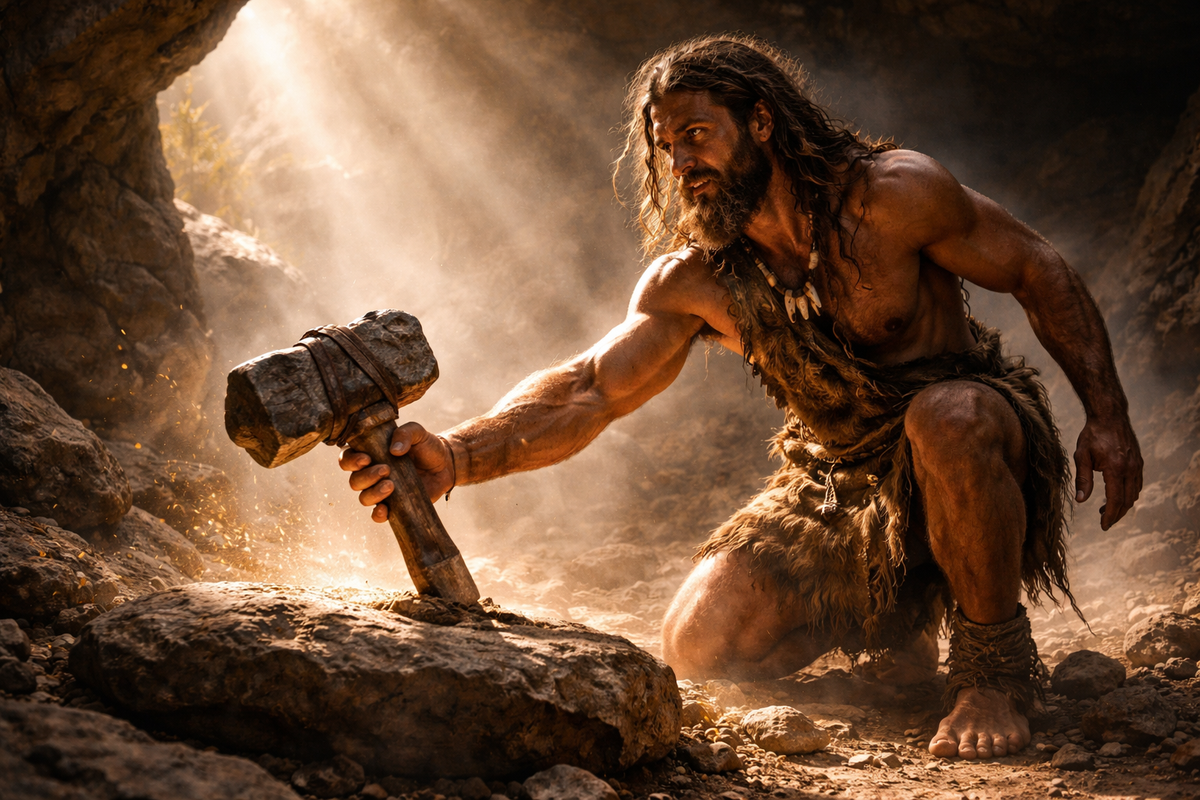
Humans existed for a very long time without much happening.
And then we grew opposable thumbs. And very quickly started using and building complex tools.
The rest is history.
Tens of thousands of years of basically nothing. Then tools. Then everything.
The same evolution just happened with AI.
And this time it's digital.
What This Means for Software
Prior to the recent breakthroughs in AI, you had to build both the intelligence and the tools into software.
You couldn't just plug intelligence into a piece of software like you plug electricity into a lamp.
Now you can.
But that's been true for a few years already, and lots of software has remained the same.
This is because legacy software already has the power plant (the intelligence) built into it, so adding pluggable electricity (AI models) doesn't change much.
But when you combine that digital intelligence with a digital hand, it changes the very nature of software itself.
To understand why, let's go back to our human analogy.
So much has changed since humans went from caves to sipping cocktails in cabanas.
But the one thing that hasn't changed very much is the human itself.
The brain is still the brain. And the hand still has 5 fingers and an opposable thumb.
And this is a feature, not a bug.
By using our brain to identify the right tool, and our hand to pick it up and use it, we can pick up one tool when we need it, put it down, and pick up another tool when we have a different job.
So intelligence being built into software is kind of like power being built into a building. It's fine either way.
The same is not true for tools.
If all your tools are stuck to your hand, it gets very complicated. Built-in tools are a huge disadvantage.
And that's exactly what software looks like today.
Most major software platforms come with all the tools built in.
Every feature, every capability, hard-coded into the system.
But with a digital brain and a digital hand you don't want the tools to be attached to the hand.
You want the hand free to pick up any tool it needs, and to put it down when it is done.
Need to send an email? That's a tool. Schedule a meeting? That's a tool. Update your customer records? That's a tool. Pick the email tool up to send the email when you need it and then put it down and pick up the next one.
You don't need a bunch of software subscriptions.
You just need a digital brain to direct the digital hand that can hold any tool.
This dramatically increases the pace of change because tools can now compound.
A tool that gets created today is usable by every digital brain and hand tomorrow.
We no longer have to rebuild the tools from scratch for every new software.
And software no longer needs to come with all the tools any of its users may need.
It can be 100% personalized to the person and the job at hand.
What This Means for You
So if all you need is a brain and a hand...
And the hand picks up only the tools you need...
You don't need 50 digital brains and 50 digital hands.
You need one brain and one hand that can use any tool.
Instead of you adapting to the software.
The software shapes itself around you.
You own your own digital brain and hand, and can use any tool with it you wish.
This is what we're building at BrainDrive.
For anyone who's been following along, we recently archived our previous software platform and are rebuilding from the ground up.
Same mission, same digital brain, but soon coming complete with a digital hand.
And the good news is that digital hands actually make user owned AI much more achievable.
Because all you need to own is the brain and the hand.
Everything else is tools.
I'll be writing more about it in the coming weeks.
In the meantime let me know what you think of the concept.
Thanks for reading.
Dave